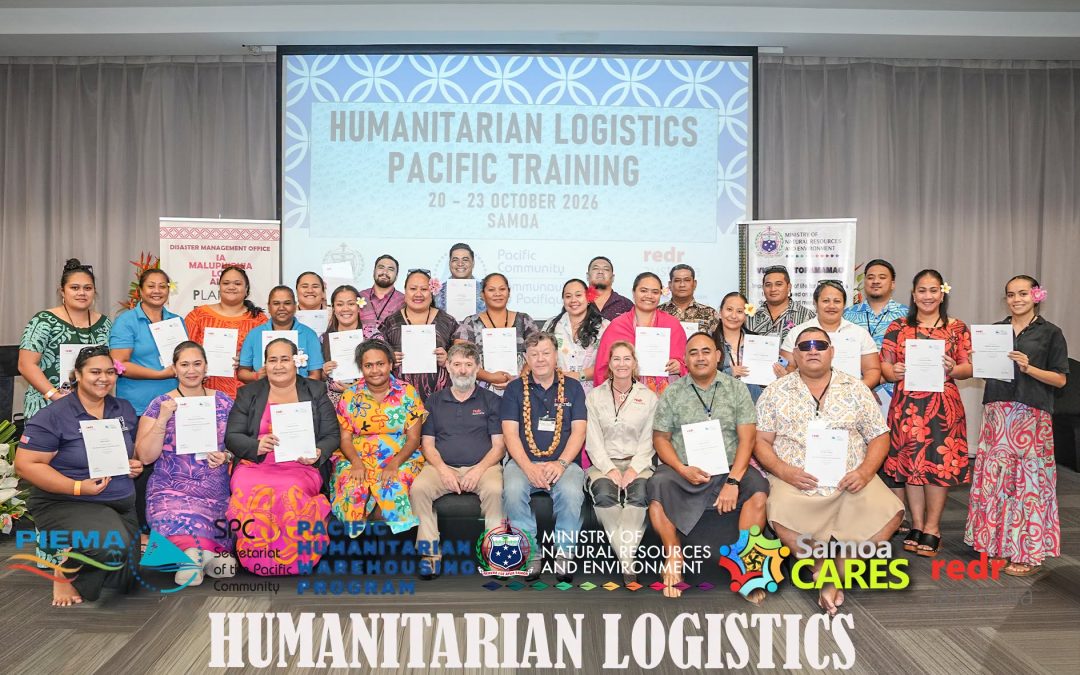
The National Humanitarian Logistics and Warehousing Training concluded with a Humanitarian Logistics Simulation Exercise, providing participants with an opportunity to apply the knowledge and practical skills acquired throughout the programme in a realistic emergency response environment.
Prior to the simulation, participants undertook field visits to Apia Port and a warehouse facility to assess logistics infrastructure and examine how transportation, storage and supply chain systems support humanitarian preparedness and emergency response. Findings from the visits were discussed during a plenary session, enabling participants to identify infrastructure capacities and potential logistical challenges.
The simulation challenged participants to apply humanitarian logistics principles in managing emergency operations, including supply chain coordination, transportation, procurement, warehousing and inventory management. The exercise reinforced the importance of effective planning, resource allocation and coordination among stakeholders to ensure essential supplies can be delivered efficiently during emergencies.
The successful completion of the programme reinforces Samoa’s commitment to strengthening national disaster preparedness and response capacity. Given the country’s geographical challenges, inter-island transport constraints and exposure to climate-related hazards, effective logistics systems and strong inter-agency coordination remain essential to ensuring the timely delivery of critical relief supplies to affected communities.
The Ministry acknowledges and sincerely appreciates the support of SPC, PIEMA, and the Pacific Humanitarian Warehouse Programme (PHWP), and RedR Australia in delivering this important capacity building, as well as the commitment and participation of all agencies and partners contributing their knowledge and expertise.