
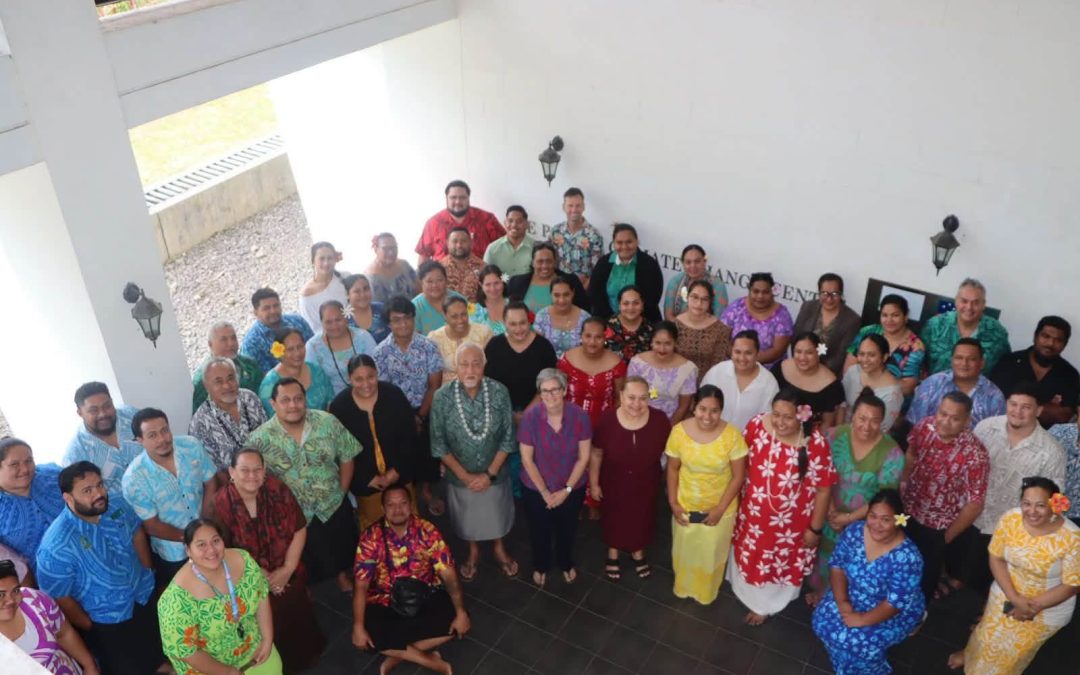
The Ministry of Natural Resources and Environment (MNRE) convened an Inception Workshop to commence Samoa’s Carbon Market Readiness Assessment, bringing together representatives from government ministries, development partners, civil society organisations, academia, and the private sector.
The assessment will evaluate Samoa’s readiness to engage in carbon markets, placing a particular focus on opportunities, requirements, and safeguards associated with Article 6 of the Paris Agreement, which provides a framework for international cooperation in achieving climate change mitigation outcomes.
Opening the workshop, Acting- Chief Executive Officer, Mr. Moafanua Tolusina Pouli, underscored the importance of taking a measured and informed approach to carbon markets. “Our priority at this stage is to understand our readiness before making decisions about participation. Ultimately, our objective is to ensure that Samoa is well informed, appropriately prepared, and able to make decisions that are in the best interests of our country and our people.”
The Director of Climate Change Resilience at SPREP, Ms. Tagaloa Cooper in her remarks, reinforced the importance of understanding Samoa’s readiness before any decisions on carbon market participation are made, highlighting the need for strong institutions, technical capacity, and safeguards to support any future engagement.
The findings of the assessment will help inform future decision-making and ensure that any consideration of carbon market participation is guided by robust governance, environmental integrity, and the long-term interests of the people of Samoa.
The Ministry expresses its sincere appreciation to SPREP for its financial support and continued partnership in strengthening Samoa’s climate change response and enhancing national capacity to navigate emerging opportunities under the Paris Agreement.
The Ministry also extends its sincere appreciation to all stakeholders who participated in the Inception Workshop. Their valuable insights, expertise, and continued engagement will be critical in ensuring that the assessment reflects Samoa’s national circumstances and supports informed decision-making on carbon markets.