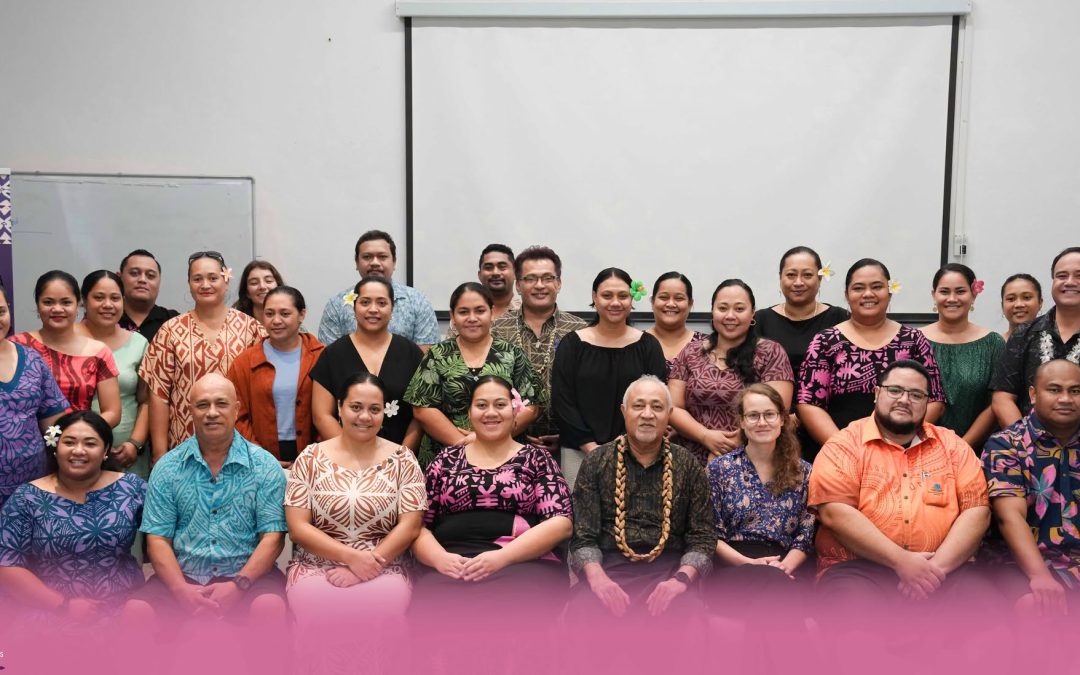
As part of Samoa’s ongoing efforts to strengthen national climate change responses, the Climate Change Division of the Ministry of Natural Resources and Environment (MNRE) today convened an internal Technical Consultation and Learning Session under the regional Building Our Loss and Damage (BOLD) Project, bringing together key MNRE divisions to strengthen Samoa’s understanding and response to climate-induced loss and damage.
The response mission together with the PMU kickstarted its activities and programs this week by meeting with Key Sectors within the Ministry (Division of Environment and Conservation, Forestry Division, Water and Sanitation, Hygiene Coordination Division, Environment Sector Coordination Division, Water Resources Division, Disaster Management Office, Meteorological Service Division and Climate Change Division) followed by a site visit to Fagaloa Bay on Wednesday to identify parts of Fagaloa that are currently experiencing impacts of climate change.
The session today formed part of the BOLD Project Implementation Support Mission, led by the Secretariat of the Pacific Regional Environment Programme (SPREP) in partnership with Climate Analytics, with support from the German Federal Foreign Office through the International Climate Initiative (IKI), and was convened at Lava Hotel.
The consultation brought together participating divisions to exchange technical knowledge, reflect on Samoa’s experiences of climate-induced loss and damage, and identify key data, information and institutional needs to support the effective implementation of the project.
Particular attention was given to non-economic loss and damage, including impacts that extend beyond measurable financial losses, such as cultural heritage, ancestral lands, biodiversity, traditional knowledge and other values important to Pacific communities. The discussions also contributed to advancing Samoa’s national priorities under the BOLD Project, including the development of practical interventions, identification of potential community response projects, documentation of adaptation limits, and the integration of Gender Equality, Disability and Social Inclusion (GEDSI) considerations.
The session reinforced the importance of strengthening collaboration and knowledge-sharing across government in developing climate responses that are evidence-based, inclusive and responsive to the realities experienced by communities.
The Ministry acknowledges the valuable contributions of all participating divisions and technical partners whose expertise and engagement contributed to today’s productive consultation and to the continued advancement of Samoa’s priorities on climate change and loss and damage.