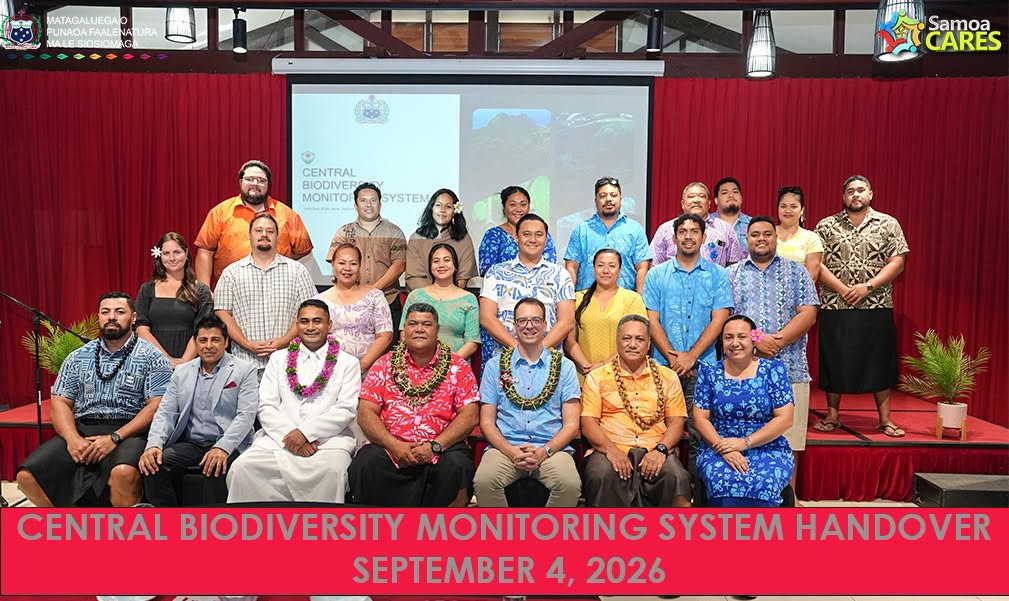
The Ministry of Natural Resources and Environment (MNRE), in partnership with the United Nations Development Programme (UNDP), officially marked the handover and orientation of Samoa’s Central Biodiversity Monitoring System (CBMS) on Friday, 4 September 2026, at the Tanoa Tusitala Hotel Conference room.
The event brought together key government representatives, development partners, technical experts, and other relevant stakeholders involved in biodiversity conservation, environmental management, and the development of the CBMS.
The CBMS represents a significant advancement in Samoa’s capacity to collect, manage, analyse, and utilise biodiversity information to support informed environmental decision-making. By consolidating biodiversity data from multiple sources into a centralised platform, the system will strengthen coordination, reduce duplication, and improve access to critical biodiversity and environmental information. It will further support national biodiversity monitoring, environmental reporting, policy development, and the implementation of Samoa’s National Biodiversity Strategy and Action Plan (NBSAP).
The system also strengthens data governance by promoting appropriate mechanisms for data sharing, security, and confidentiality, while ensuring that sensitive ecological data and information is appropriately protected. In addition, the CBMS will enhance Samoa’s capacity to monitor and report on progress towards national environmental targets and relevant international biodiversity commitments, providing a stronger evidence base for conservation planning and environmental management.
The establishment of the CBMS represents an important investment in strengthening Samoa’s environmental governance and advancing the long-term conservation and sustainable management of its natural resources. By improving the availability and management of reliable biodiversity data and information, the system will support more effective decision-making and contribute to safeguarding Samoa’s unique ecosystems for present and future generations.
The Ministry extends its sincere appreciation to UNDP, the technical team, consultants, partners, and all stakeholders whose collective efforts and contributions have supported the development and establishment of this important information system.