The second day of Exercise Longreach 26 provided a practical and structured environment for participating agencies to examine disaster in particular tsunami response arrangements, with particular emphasis on preparedness, inter-agency coordination, and informed decision-making within a simulated tsunami emergency scenario.
Following a review of the key discussions from Day 1, participants were introduced to the tsunami exercise scenario and progressively worked through three critical phases of disaster management: Warning and Evacuation, Immediate Response, and International Assistance.
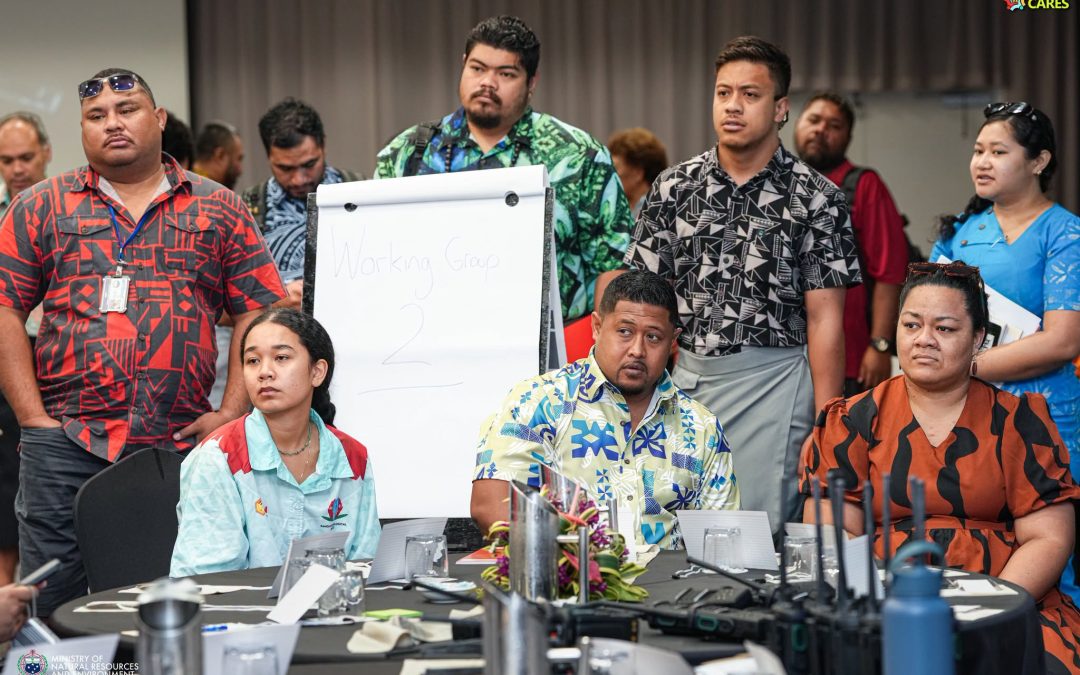
Through facilitated working-group discussions, participants considered the roles and responsibilities of relevant agencies at each stage of the tsunami scenario, examined coordination and communication requirements and, identified actions necessary to support an effective and timely response. The exercise encouraged participants to critically assess existing arrangements and consider how decisions would be made as the situation developed and response requirements evolved.
The progression from early warning and evacuation through to immediate response and the coordination of international assistance highlighted the interconnected nature of disaster management. It reinforced the importance of timely decision-making, clearly defined roles and responsibilities, effective communication, and a shared understanding of response priorities across government agencies and other participating stakeholders.
An important component of the day was the presentation of working-group findings, which provided an opportunity for participants to share their analysis, perspectives, and proposed actions. These discussions contributed to a broader understanding of the practical challenges associated with coordinated disaster response and highlighted areas where further strengthening may be required.
The day concluded with an After-Action Review, providing a formal opportunity for participants to reflect on the exercise, identify strengths to be sustained, and recognise areas requiring further improvement. The review also supported the identification of key lessons that can inform future preparedness activities and contribute to strengthening Samoa’s disaster management arrangements.
Exercise LONGREACH 26 continues to support Samoa’s efforts to strengthen national preparedness and institutional capacity by providing agencies with an opportunity to test response arrangements, strengthen coordination, and identify practical lessons for more effective emergency management.
The Ministry acknowledges and sincerely thanks the Australian High Commission’s Department of Foreign Affairs and Trade (DFAT), the Australian Defence Force (ADF), the Australian Civil-Military Centre (ACMC), Headquarters 1st (Australian) Division, and all participating national agencies and partners for their collaboration, commitment, and continued support towards strengthening Samoa’s disaster preparedness and resilience.
The exercise has established an important foundation for the week ahead, further strengthening communication, coordination, and partnerships towards a safer and more resilient Samoa.
𝙁𝙤𝙡𝙡𝙤𝙬 𝙖𝙡𝙤𝙣𝙜 𝙬𝙞𝙩𝙝 𝙪𝙨 𝙩𝙝𝙧𝙤𝙪𝙜𝙝𝙤𝙪𝙩 𝙩𝙝𝙚 𝙬𝙚𝙚𝙠 𝙛𝙤𝙧 𝙢𝙤𝙧𝙚 𝙪𝙥𝙙𝙖𝙩𝙚𝙨 𝙖𝙣𝙙 𝙞𝙣𝙨𝙞𝙜𝙝𝙩𝙨 𝙛𝙧𝙤𝙢 𝙀𝙭𝙚𝙧𝙘𝙞𝙨𝙚 𝙇𝙊𝙉𝙂𝙍𝙀𝘼𝘾𝙃 26 (𝙎𝙖𝙢𝙤𝙖)