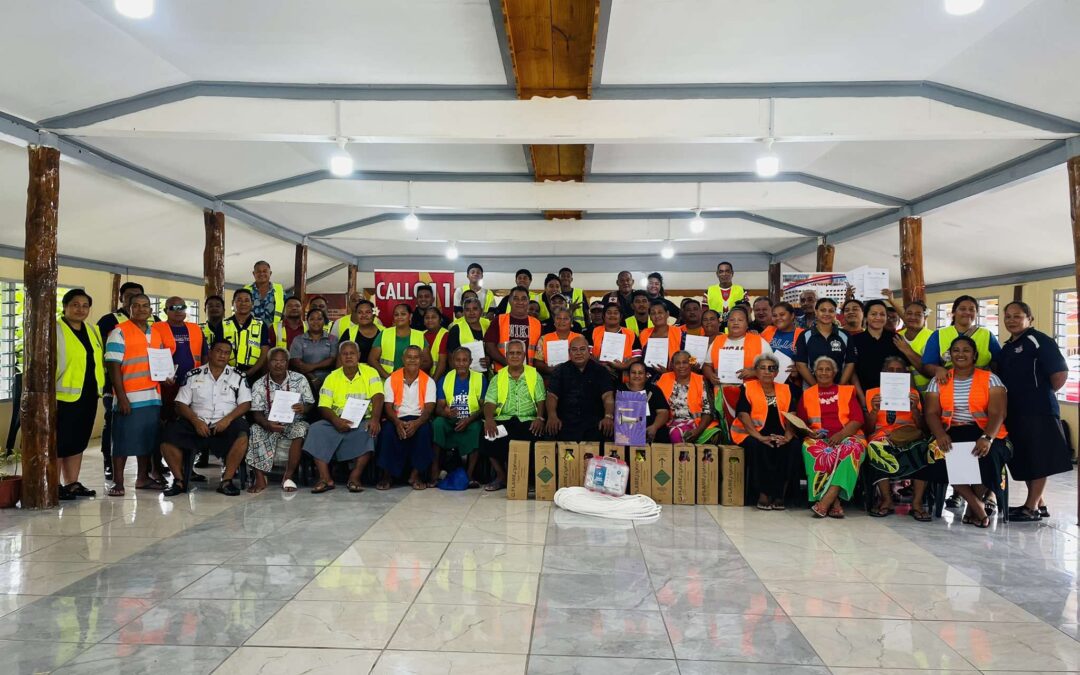
For the past two days, the Government of Samoa, through the National Disaster Management office (NDMO) under the Ministry of Natural Resources and Environment, in partnership with UN Women, convened a national consultation to review the Gender in Disaster Risk Management (DRM) Policy (2017-2021). The workshop brought together government ministries, civil society partners, response agencies, village representatives, market vendors, and development partners committed to strengthening Samoa’s resilience through inclusive, evidence-based disaster management.
The consultation is part of Samoa’s ongoing commitment to strengthen evidence-based and gender-responsive disaster resilience under the Disaster and Emergency Management Act (2007), Samoa Disaster Risk Management Policy 2024 – 20234 and the National Disaster Management Plan (NDMP) 2025 – 2035.
Strengthening Gender Integration Across the DRM Cycle
The workshop emphasized:
· Inclusive participation of women in community and national DRM structures;
· Mandatory integration of sex-, age-, and disability-disaggregated data (SADDD) in assessments and systems;
· Strengthened GBV prevention, safety measures and survivor-centred approaches in response coordination mechanisms; and
· The need for gender-responsive budgeting, leadership quotas, and accessibility standards across the DRM system.
New Evidence Underscores Why Gender Matters in DRM
UN Women presented new insights from the 2023 Gender and Environment Survey (GES), which show that disasters significantly increased unpaid care and domestic work burdens for women in Samoa, especially following the 2023 climate-related events. Women reported disproportionate increases in childcare, care for elderly or injured persons, and household responsibilities, often at the expense of paid work.
GES findings also revealed:
· Women rely more on social media and the internet for early warning information, while men more commonly access television alerts.
· Despite low participation in formal climate and disaster decision-making (4–5%), women are highly engaged in natural resource management, including water governance and fisheries committees—an important leadership contribution that must be embedded in national policy.
These insights reinforce the need for DRM policies to recognize women’s frontline roles and ensure their representation and safety.
Aligning with Global and National Commitments
The review highlighted Samoa’s obligations under CEDAW, the Sendai Framework for Disaster Risk Reduction 2015–2030, and national frameworks such as the National Policy for Gender Equality and Rights of Women and Girls 2021–2031. These frameworks call for women’s leadership, inclusive planning, and the use of SADDD to ensure DRM efforts truly meet the needs of all.
“While many ministries and organizations collect data related to disasters, approaches differ greatly. There is a need to strengthen consistency through shared standards, particularly for sex, age and disability-disaggregated data that we recognized as essential for future coordination and evidence-based planning”, Shalom Fautua, MPMC
The presenters congratulated the Government of Samoa for proactively embedding gender into disaster response and climate action, including within national adaptation and NDC processes.
Calls to Action: Policy Gaps and Key Recommendations
The consultation identified several policy gaps and proposed targeted recommendations for the next generation of the DRM Gender Policy:
1. Strengthening Gender and GBV Foundations in DRM
· Ensuring all disaster risk management policies, including the DEM Act and embed mandatory gender and GBV requirements, with clear definitions and survivor-center protocols
2. Improved Data, Monitoring and Resources
· Require the consistent collection of sex, age and disabilitiy disaggregated data (SADDD) intergrate gender indicators into national DRM reporting, and allocate dedicated budgets for gender-responsive actions
3. Build Capacity & Inclusive Communication
· Expand gender and GBV for all DRM stakeholders and strengthen inclusive communication and early warning systems that reach women, girls, and vulnerable groups.
“Women are already active contributors to resilience efforts at the grassroots level, especially through committees, women’s groups, and resource-management roles. However, their representation is not always visible in formal DRM decision- making structures. The new policy must create those clear pathways for women’s participants and leadership at all levels.” Jade Eli-Sanerivi, STA
Next Steps
“This consultation marks a major step forward for Samoa. Our people bring immense knowledge, resilience and leadership to disaster preparedness and recovery. As we revise the Gender in DRM Policy, our priority is to ensure that no one is left behind. We are strengthening systems, investing in data, and creating space for women’s voices at every level of decision-making. As we work together, we are shaping a more resilient Samoa for current and future generations,” Fesolai Molly Nielsen, ACEO, NDMO
“Disasters are not gender-neutral. They expose and magnify existing inequalities and often the most vulnerable groups suffer more than others. Samoa has always led the way in inclusive and community-oriented disaster preparedness. UN Women is proud to partner with the NDMO to support expanding and strengthening their seminal policy and working together to help communities be safer and better equipped to address future disasters,” Papali’i Mele Maualaivao, CPC, UN Women.
NDMO will consolidate the discussions, evidence, and recommendations into the forthcoming revised Gender in DRM Policy, ensuring alignment with national priorities and international standards. UN Women reaffirmed its commitment to providing technical support throughout the process.
ENDS